A Gentle Creative Practice
There are moments when emotions move through us strongly — overwhelm, frustration, anger — and even after we’ve expressed them, something still feels unfinished.
The mind may understand what happened.
The emotion may have already moved.
And yet the body lingers.
This isn’t a failure of processing or insight. More often, it’s a sign that the nervous system hasn’t fully integrated the shift.
Somatic art offers a gentle way to support that integration — not by analyzing emotion, but by working directly with movement, sensation, structure, and completion.
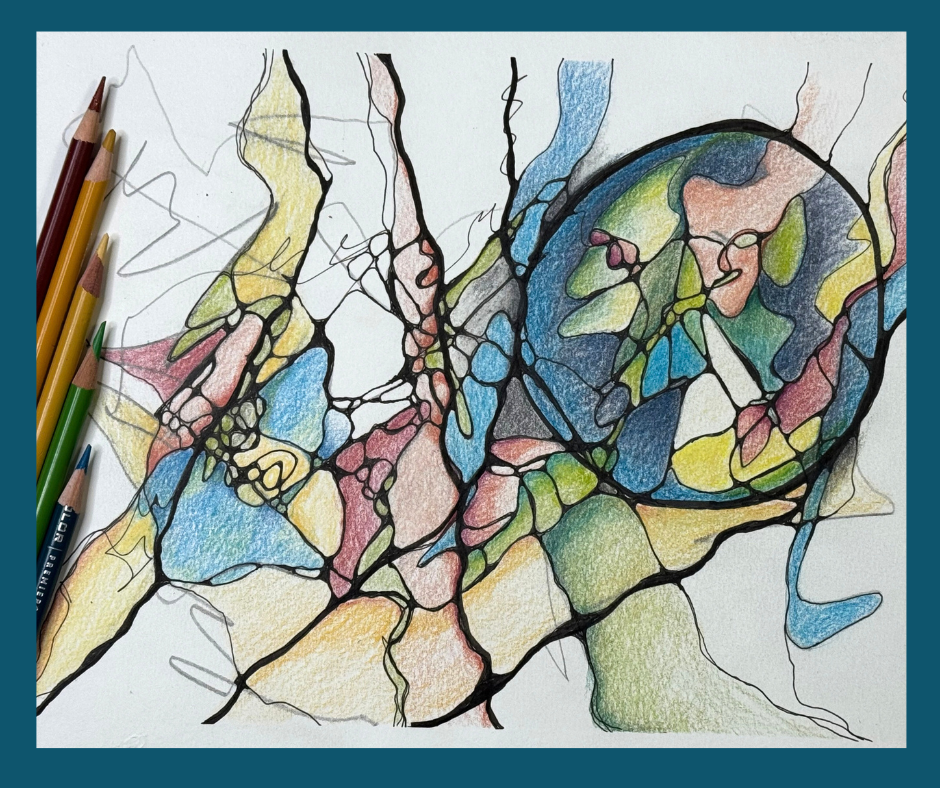
Somatic art
It doesn’t ask the nervous system to explain itself, it offers movement, structure, and a place to settle.
What Is Somatic Art?
Somatic art is a body-led creative practice.
Rather than starting with meaning, interpretation, or expression, it begins with physical experience:
the movement of the hand
the pressure of a line
the rhythm of repetition
the feeling of containment or release
The goal isn’t to create something symbolic or aesthetically pleasing.
It’s to support the nervous system as it settles.
This kind of art doesn’t ask “What does this mean?”
It asks “What does the body need right now?”
Why the Nervous System Responds to Art
The nervous system is constantly tracking safety through sensory input.
It responds especially well to:
Rhythm – steady movement calms excess signal
Clear boundaries – beginnings and endings create orientation
Containment – structure reduces overwhelm
Choice – color, pressure, and pacing restore agency
Art naturally provides all of these when approached intentionally.
This is why drawing, mark-making, and working with color can feel calming even when words fall short. The body doesn’t require explanation — it responds to experience.
Expression vs. Regulation
It’s important to name a subtle but meaningful distinction.
Expression allows emotion to move.
Regulation helps the system settle afterward.
Many creative practices focus on expression alone — getting feelings out, telling the story, releasing what’s held.
Somatic art includes that movement and provides a way to integrate what’s been released, so the body doesn’t stay activated.
This work is not therapy, and it’s not meant to process trauma.
It’s a supportive, self-guided practice for people who want a calmer, more grounded relationship with their internal states.
How Somatic Art Supports Integration
A somatic art practice often unfolds in phases, even if they aren’t named explicitly.
It may include:
Non-verbal mark-making that allows energy to move without turning it into a story
Introducing structure through lines or forms that provide containment
Softening and smoothing where things meet, signaling safety
Color work that restores choice and agency
Clear completion cues, such as a focal shape or finished edge
Each of these elements communicates something different to the nervous system. Together, they help the body recognize that the moment of intensity has passed.
Why Meaning Isn’t Required
One of the most supportive aspects of somatic art is that nothing has to be interpreted.
You don’t need to understand the image.
You don’t need insight.
You don’t need to explain anything.
Some drawings aren’t meant to be read — they’re meant to be felt and completed.
When the nervous system receives clear signals of movement, structure, and closure, it often settles naturally.
Seeing the Practice in Action
If you’d like to see how this kind of somatic art practice unfolds, you can watch a full drawing session here:
The video demonstrates how non-verbal mark-making, structured line work, color, and completion cues work together to support nervous system regulation — without explanation or analysis.
A Gentle Invitation
Somatic art isn’t about doing it “right.”
It’s about noticing what helps you arrive more fully in your body.
If this way of working resonates, you’re welcome to explore the other reflections and practices shared here on the blog as this body of work continues to unfold.
Some experiences don’t need to be understood —
they just need space to settle.