Letting the Hand Lead: A Nonverbal Drawing Practice
How non-verbal mark-making supports emotional integration
About This Drawing
This drawing began after a period of emotional intensity — overwhelm, frustration, and anger — not as a way to express those emotions, but as a way to help the nervous system settle afterward.
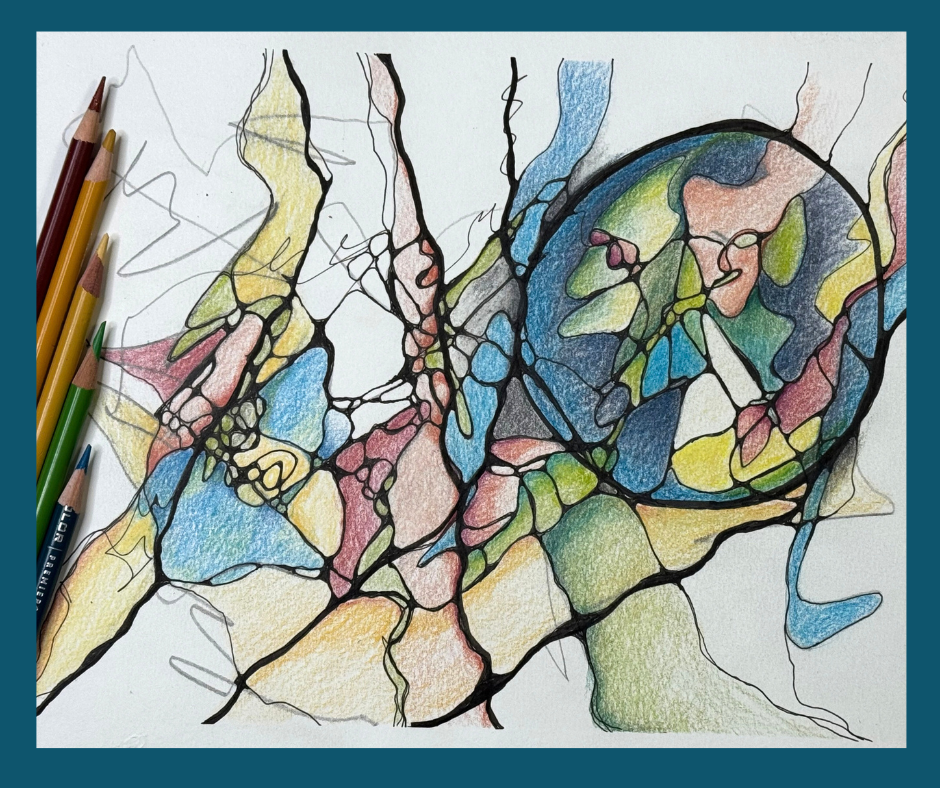
Sometimes emotion has already moved, but the body hasn’t quite arrived yet.
This drawing was created for that in-between space.
Letting the Hand Move First
In the early stages of this drawing, the marks resemble writing — but they don’t form words. They don’t carry language. They aren’t meant to be read.
The hand moves in a way that feels almost familiar, like writing, but without the pressure to say something correctly.
This allows movement without meaning.
When the marks don’t need to be interpreted, the thinking mind can soften. The nervous system doesn’t have to organize sensation into narrative. The hand simply responds to what the body is holding.
Sometimes that movement is quick.
Sometimes it presses harder.
Sometimes it circles or repeats.
The point isn’t expression.
The point is motion.
A Name for This Kind of Mark-Making
This style of mark-making is sometimes called asemic writing — marks that look like writing but carry no readable meaning.
In literary and visual art contexts, asemic writing explores language beyond words. In this drawing, it serves a more somatic function.
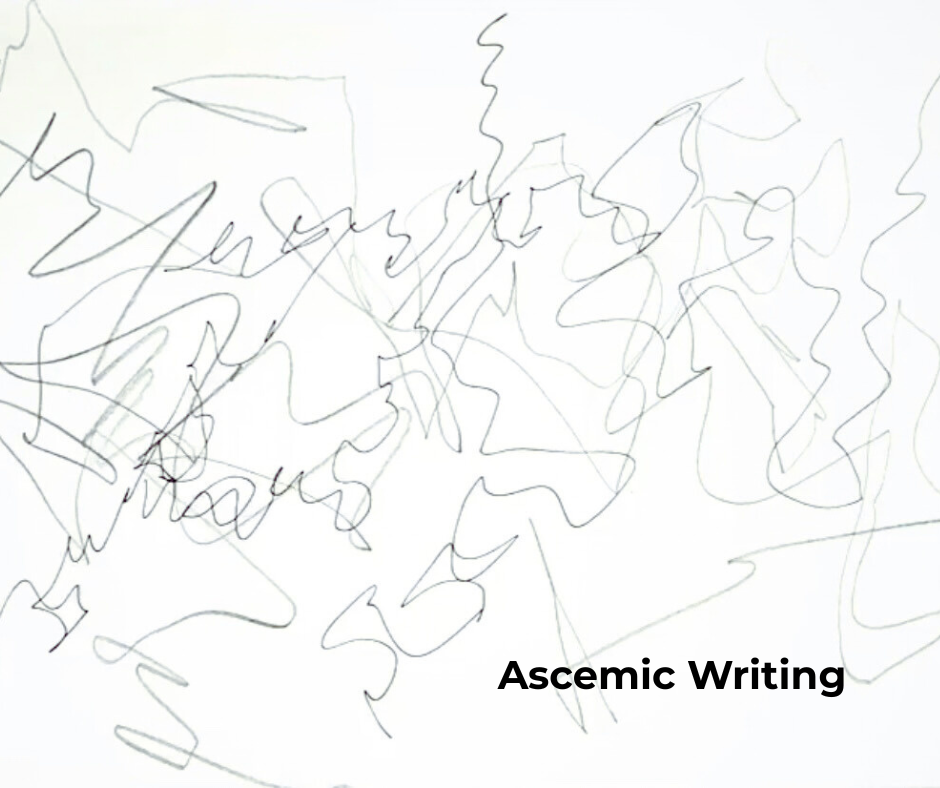
Ascemic Writing
Utilizes non-verbal mark making that explores language beyond words. In this drawing it serves a somatic function.
By removing the need for interpretation, the hand can move freely. Emotional energy can shift without turning into a story or analysis. There is no right sentence, no correct statement — only rhythm and sensation.
For overwhelm, this can feel like releasing excess signal.
For frustration, it may feel like relieving pressure.
For anger, it might move as heat or force through the page.
The nervous system responds to movement long before it responds to explanation.
From Movement to Structure
As the drawing unfolds, structure begins to appear.
Thicker lines are introduced — not to control what came before, but to support it. Where lines intersect, edges are softened. This gentle rounding signals safety and coherence.
The early marks are no longer chaotic; they are held.
This is where the shift happens — from release to integration.
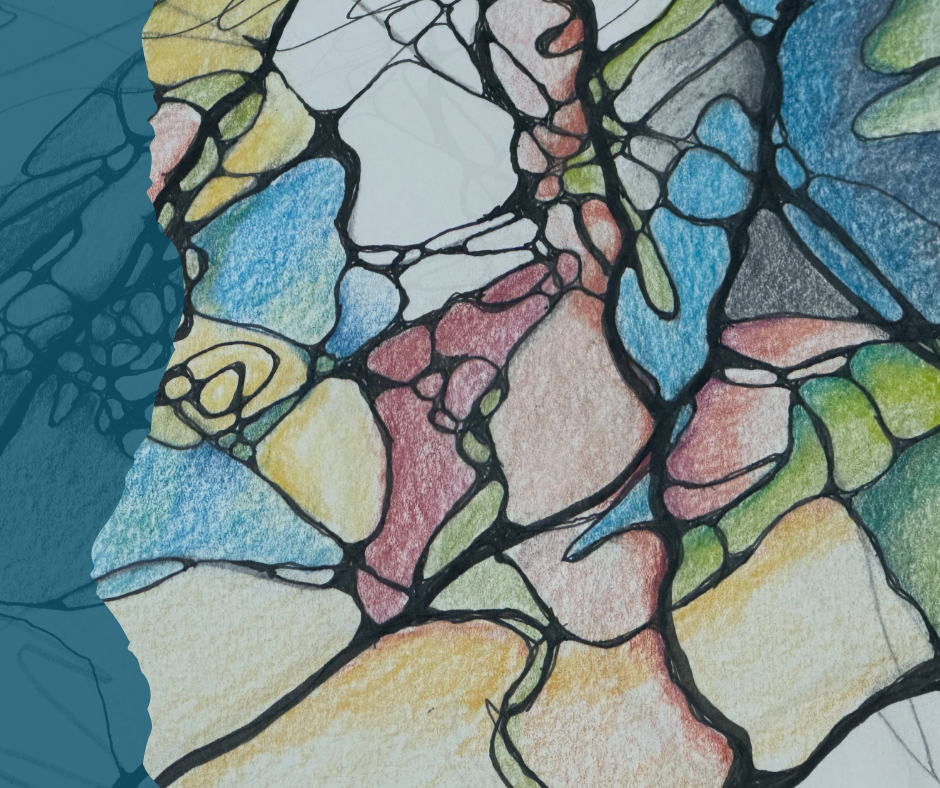
Structure appears.
Stronger lines help create structure and harmonizing lines help emotions begin to soften.
The Role of the Circle
At a certain point, a focal circle is placed within the drawing.
The circle doesn’t contain the emotion. It doesn’t fix anything. It simply offers a clear place to settle — a signal that the intensity has passed.
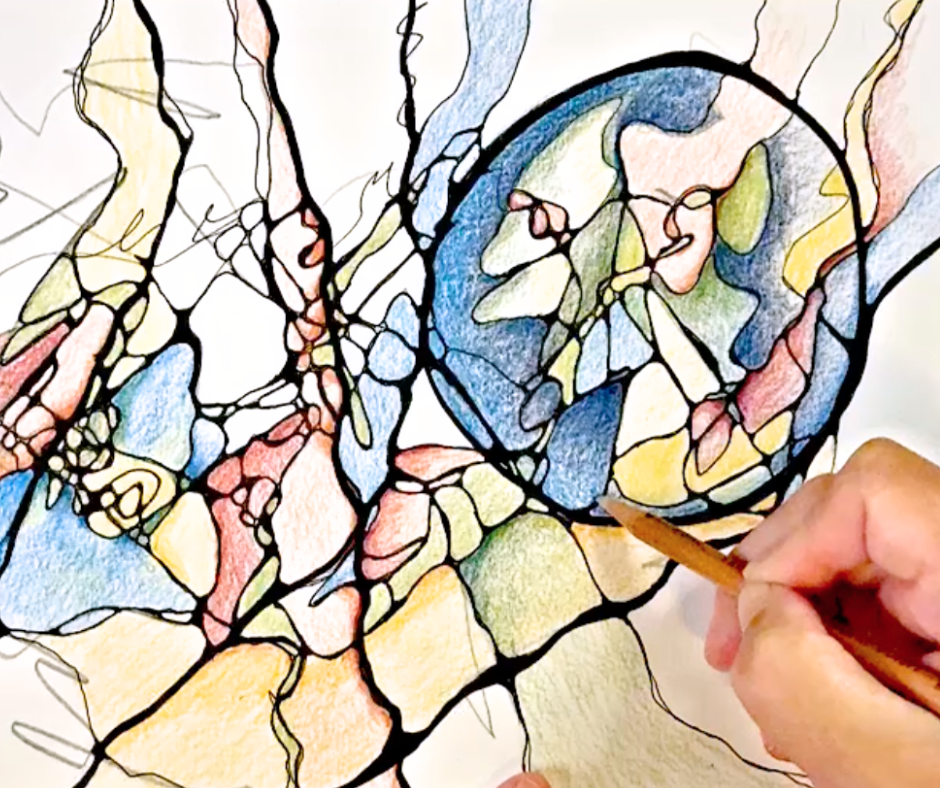
Clear completion cues matter.
The nervous system recognizes boundaries and endings.
Clear completion cues matter. The nervous system recognizes boundaries and endings.
From this settled point, the drawing continues quietly — through shaping, shading, and color refinement. This later phase is less about movement and more about coherence.
Integration has its own rhythm.
Integration Without Interpretation
When the drawing is finished, it doesn’t require explanation.
It doesn’t need a title that decodes it.
It doesn’t need to be understood.
Some drawings serve as witnesses to a completed internal shift. They record a process the body has already metabolized.
Meaning is optional.
Settling is not.
Watch the Process
If you’d like to see this drawing unfold in real time, you can watch the full session here:
→ Integrating Overwhelm, Frustration, and Anger Through Somatic Art
If you’re new to this way of working, you may also want to read:
→ Somatic Art and Nervous System Regulation: A Gentle Creative Practice
Closing Reflection
Not every mark needs meaning.
Not every emotion needs explanation.
Sometimes the body simply needs movement, structure, and a place to settle.